Wuthering Heights Review
By Andrew Fuente·April 27, 2026
Have you ever found yourself in love? Was it as magical and flawless as you hear about in the media? Truthfully, I find many traditional love songs superficial, unrealistic, and imaginary. Love is not pure bliss or euphoric ignorance of any other emotion. Love is a raw, nonlinear experience poorly described by the dominating love anthems of modern pop. What Ed Sheeran and Taylor Swift attempt to explain in hits like “Thinking Out Loud” and “Opalite” land on watered-down versions of what love is. However, Charli xcx approaches the essence of love in an unorthodox way on her latest album, Wuthering Heights.
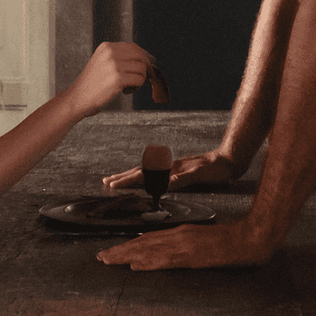
The album is a soundtrack to Emerald Fennell’s film adaptation of the novel Wuthering Heights, but it stands confidently on its own, with no explicit reference to the film or novel. However, the recurring string orchestra gestures to the time period of the story. Across Wuthering Heights’ 12 tracks, eerie violas and booming double basses intertwine with Charli’s signature synth beats. In stark contrast with BRAT, Charli’s powerful singing voice is foregrounded throughout the album. The fusion of her mezzo-soprano voice with an orchestral palate echoes the modern gothic revival. Wuthering Heights is an electronic British symphony that suspends time itself in its all-consuming pursuit of romance, invoking it in both its modern, heart-pumping synths and its classical, swooning strings. In this way, Wuthering Heights echoes Charli’s debut album, True Romance. Both conjure love as an overwhelming force, thrilling and excruciating in equal measure.
Wuthering Heights, both the album and the film, open with “House,” a dark, captivating spoken-word poem, supported by a creepy buildup of strings until Charli mutters, “I’m gonna die in this house.” Frankly, this track worked well in the movie as a contributor to unease, but it falls short on its own because of how quickly it became memed across social media. While I initially saw it as an artistic, Ethel Cain-esque introduction, it doesn’t fit on the album proper, diverging from the “tortured romantic pop” of the rest of the songs.
Fortunately, this horrid house comes crashing down when a “Wall of Sound” sweeps in and overloads your senses with euphoric layers of dissonant violin and dramatic cello. The listening experience of Wuthering Heights is, overall, a visceral and erotic plunge into overwhelming love. On “Wall of Sound,” Charli details the paradox of love (“Love and hatred and I can't escape it”) but remains addicted (“You're what keeps me breathing / Keeps my heart beating”). "The track breathes, rising and falling, patiently building in dynamic intensity until it lives up to its title. This song is best enjoyed with headphones and a mental montage; I have easily lost myself in its majesty more than I wish to admit. The tragic romance continues in “Chains of Love,” where Charli is physically imprisoned by love, no matter how hard she tries to escape. The best way to describe the progression of the song is like a climax, as the chorus erupts after Charli screams, “I can’t let go.” “Altars” is the most tragic piece Charli put on this album, despite its upbeat backing. The song opens with “As I kneel before your altar, I begin to cry,” an expression of how being in love can feel like worshipping the object of affection. But Charli describes how “You’re gonna end up killing me,” speaking to the consuming force of love and a truthful, darker reality of losing yourself love.
As successful as I find Charli to be in capturing what love is, I also recognize her description wasn’t consistent across the album. Some tracks, put plainly, are boring. “Seeing Things” feels like an unskippable cut scene in Bridgerton: Charli seems to write from Heathcliff’s point of view, supernaturally haunted by Cathy. But the modern film adaptation didn’t even attempt to include Cathy’s haunting, and without the context of the novel, the track doesn’t stand on its own. Even without this tie to the story, the lyrics are repetitive and not as complex as some other tracks, which better convey love. “Out of Myself” is another partial flop, where the freaked-out lyrics aim to describe the complex interplay between eroticism, violence, and love. Charli begs her paramour, “Please rub the salt in my wounds/ I like the person you turn me to,” and to “Put the rope between my teeth.” It feels halfhearted, stuck in the mushy middle between dramatic and kinky. Of all the songs on , this is the one that reminds me of the grossly sensual aspects of Fennell’s polarizing films. As a whole, is rather half-baked, with some songs failing to rise to the splendor of their instrumental backing. However, it marks a healthy transitional step for Charli, a way for her to plumb new sounds and themes in the wake of her meteoric rise. Although not a typical soundtrack album, has a distinctive vision that is truly admirable. It’s gratifying to see Charli experimenting (and mostly succeeding) now that she has established her platform as a pop icon following the sensation that was . I can foresee the choices she made in making this album inspiring other artists in the coming years, as music continues to recycle itself and more period revivals are made mainstream. Needless to say, Charli won’t be taking a trip to the Khia Asylum any time soon.