For Melancholy Brunettes (& sad women) - Japanese Breakfast
By Thomas Lu·March 29, 2025
In Matteo Maria Boiardo’s epic poem Orlando Innamorato, the knights Orlando and Rinaldo fight over the same woman, venturing through courtly tournaments and enchanted forests in their quest for love. But just as the poem reaches its conclusion—the knights decide the bravest warrior will win her affection—it abruptly ends. The French invasion of Italy suspended Boiardo’s efforts to finish his work, and the poem’s interrupted conclusion stands as a symbol of desire thwarted, never to be fulfilled.
Leave it to Japanese Breakfast’s Michelle Zauner, indie rock’s literary phenom, to pick up this centuries-old narrative thread. “Orlando in Love,” off her fourth album For Melancholy Brunettes (& sad women), follows a modern-day Orlando living out of a Winnebago trailer. While writing doomy, lovesick poetry, he glimpses a siren outside his window, “singing his name with all the sweetness of a mother.” In the span of one line, he is seduced and drowned. As a parable of unfulfilled desire, “Orlando in Love” is the thematic anchor of For Melancholy Brunettes, an album populated with empty lives, one-sided relationships, and lots of longing.
Japanese Breakfast’s last studio output was in 2021, a dizzying year for Zauner. The one-two punch of her third album Jubilee and her memoir Crying in H-Mart, released within 6 months of one another, propelled her to both indie rock stardom and the New York Times Bestseller list. And yet newfound fame was exhausting: “I felt like I was sitting at a poker table and I was just winning hand after hand and I was just so afraid of losing the entire time,” she told Vulture in March. For Melancholy Brunettes, with its mythological imagery and fictional characters like the doomed Orlando, feels like a conscious retreat from the autobiography of her previous work. Though the record is tinged with personal lore—“Leda” and “Little Girl” in particular recall Zauner’s relationship with her father—details are refracted through fictional narrative. This rangy approach to songwriting grants the album a gothic, literary scope, even as it clocks in at a slim 32 minutes.
Zauner’s lyricism is the selling point of For Melancholy Brunettes—each song unfolds as a carefully plotted narrative, ornate and methodical. Take a highlight like “Mega Circuit,” which starts with the narrator watching her lover race ATVs and gradually expands into an incisive portrait of toxic masculinity. There’s an entire universe in the ending couplet: “Deep in the soft hearts of young boys so pissed off and jaded / Carrying dull prayers of old men cutting holier truths.” The fact of the matter, swaddled in this florid imagery, is that Zauner’s narrator stays with him, pissed off and jaded though he is. Unfulfillment forms a through-line to “Little Girl,” where Zauner counts the “Passing days / immolation.” In just three words, the calamitous is bound to the quotidian. The flipside to the mythological tragedy of “Orlando in Love” is the everyday pain of yearning.
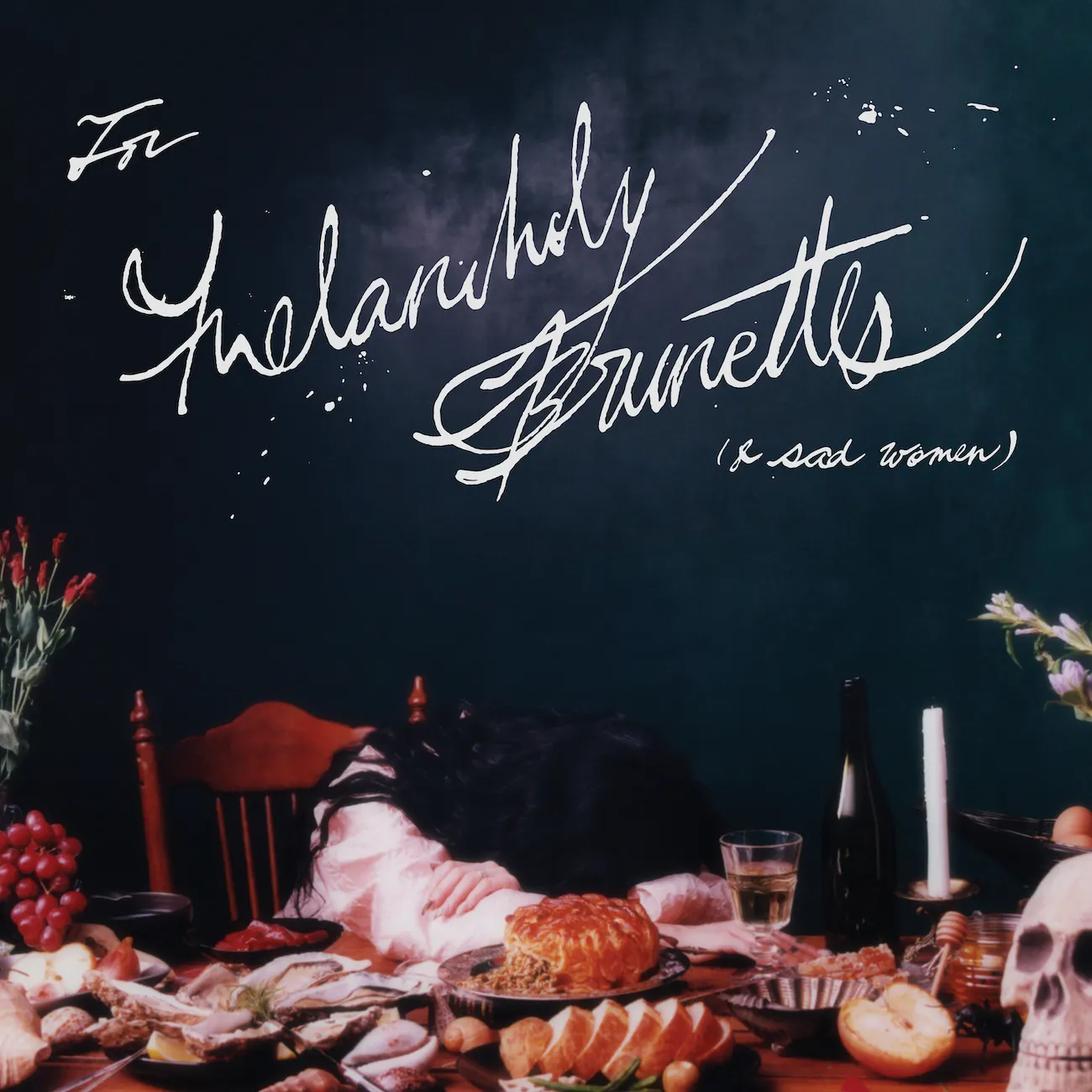
It’s a shame; where the writing is frequently arresting, the instrumentation often settles for being pretty. The production (courtesy of indie rock stalwart Blake Mills) largely consists of fingerpicked guitar, strings, and delicate piano; the occasional touch of pedal steel adds a country flair. There’s precedent for this alt-country turn—the 2020s have seen indie rock icons like Mitski, Angel Olsen, and Hurray for the Riff Raff make naturalistic, folksy albums. To Zauner’s credit, the upbeat cuts on For Melancholy Brunettes are a strong addition to this canon. “Honey Water” slowly sinks its acoustic guitar in distortion until it resembles shoegaze, while “Mega Circuit” juxtaposes its bruised lyrics with jaunty folk rock. But in the album’s quieter, more atmospheric moments, the instrumentation feels untethered from its songs. Take a song like “Winter in LA,” an alt-country cut about a depressed housewife. The vaguely honky-tonk piano and the occasional stab of horns aim for irony, but neither is buoyant enough to sell it. Or the ambling guitar and synths of “Leda,” which is just a notch above being included on a 3-hour YouTube meditation compilation. Much of the second leg of the album, starting from “Little Girl,” passes by in this idle haze. The music becomes as pretty, methodically arranged, and ultimately static as the still life on the cover.
Of the album’s twin themes—the fervor of desire, the melancholy of its unfulfillment—the album is overtly concerned with the latter. You hear it in Zauner’s vocal performance: her voice, once a heady yelp on “Be Sweet” and “Everybody Wants To Love You,” is now a near-sigh. She carries this austerity through all of For Melancholy Brunettes’ ten tracks; in her subdued, steely performances, Zauner mostly projects acceptance of desire’s obstruction. “So it goes / I don’t mind,” she repeats on “Honey Water.” Perhaps the album is treading water by design—melancholy is a kind of boredom, after all. Flashes of passion are few and far between. Orlando, newly resurrected, lives and dies in just three minutes.