Afterglow Review
By Thomas Lu·April 27, 2026
In case it hasn’t reached the Merriam-Webster dictionary yet, let me take a moment to define “Eusexua” for the unenlightened. The word, as FKA twigs clarified in an interview with The Standard, means “that moment of nothingness just before a big surge of inspiration or creativity or passion.” It’s got an album-length definition as well: EUSEXUA, a cerebral, club-tinged record, released in January of 2025.
Ever since that interview, I wondered about that big surge of creativity she teased. Was that all channeled toward EUSEXUA, or was there more work on the way? Ten months later, we have the answer: EUSEXUA Afterglow, the companion release to EUSEXUA. Written and produced in just six weeks, Afterglow roams much freer than its sister album. No new words are needed this time around, just eleven tracks that deepen the EUSEXUA universe, wrangling together LP1’s crystalline soundscapes, EUSEXUA’s club textures, and Caprisongs’ genreless spirit into one pleasure-forward statement. If EUSEXUA were twigs’ Ray of Light, then Afterglow is her Music: extroverted, loose, clubby.
“I’ll be in my head if you need me,” twigs ruminated on EUSEXUA, but on EUSEXUA Afterglow, she’s fully present and ravenously experiential. She’s letting herself fall headlong into a situationship, chasing her next high, eating sushi. Twinkling bits of humor and levity enter her oft-serious point of view, like on “Wild and Alone,” a twitchy collaboration with PinkPantheress where she deadpans, “I think being famous is funny.” On “Sushi,” she lists dream date activities with the casual specificity of someone who’s thought about it a lot and is done waiting: “I wanna cinema somewhere outside / I want a cinnamon bun on a bike.” Her perspective is so attuned to the everyday that it feels effortlessly lived in. It seems that the avant-garde alien she often channels is assimilating to life on Earth.
That life, as one would expect, is filled with clubbing and afters. If EUSEXUA was more about the idea of the club, then Afterglow commits to the floor-fillers: “Love Crimes” opens the album with punishing four-on-the-floor techno, “Slushy” climaxes in a storm of jungle beats, and “Hard” floats atop a bed of Atlanta bass. twigs’ take on these disparate dance scenes is often prismatic and deconstructed, but as a whole Afterglow is bodily and immediate. Take “Predictable Girl,” a UK garage song run through a shredder: it’s pumped full of grit and distortion, but emerges a complete earworm. In the music video, two androids speed on a motorcycle through an urban jungle, echoing Akira, the 1988 Japanese cyberpunk film. Afterglow’s sonic palate evokes the same louche futurism. It’s a neon-lit sci-fi soundscape, at turns gritty and lush.
There’s a looseness of form to Afterglow that I adore, though it lacks the consistency and focus of her best work. Regardless, the whiplash sequencing of the album reflects the scatterbrained intensity of pushing your artistic limits while living life to its fullest, in the lineage of, say, Motomami and SOS. These songs move and breathe, with twigs singing and rapping with equal aplomb. Sonic ideas swirl in and out like a live DJ mix, like the jersey club kicks that crack open “Touch A Girl” and leave just as swiftly, a sudden-onset memory of the club. Vocal effects–a facet of her sound that I sorely missed on her last two projects–are back in abundance. Here they contribute both cheeky fun and artistic meaning, like in the lovesick highlight “Hard,” where a robotic tic (“You–you–you”) conjures the image of an obsessive, digitized twigs, reaching toward the object of her affection through a screen. is dense with little touches like this, a garden of sonic delights on repeated listens. It’s the sound of an artist operating at her highest frequency.
Afterglow’s most thrilling moments embrace total abandon, like “Cheap Hotel” and “Sushi,” which throw pop structures out the window. The former feels like listening to Massive Attack with a head high, wafting through different tempos, trip-hop beats melting into one another like a kaleidoscope in motion. “Sushi,” the latter track, might be the highlight of the entire EUSEXUA era, a monstrous two-parter that begins as a runway stomp and morphs into a ballroom extravaganza. It’s “Pure/Honey” if Beyoncé were a cyborg, a showcase of twigs’ ever-expanding vision and burgeoning talent as an MC. In moments like these, Afterglow is pure fun, melding twigs’ campier, sillier side with her outré sonic instincts. Not all of its experiments are equally successful: “Lost All My Friends” and “Stereo Boy,” its last two tracks, introduce interesting sonic ideas, but mostly drift. But make no mistake–Afterglow is still a hell of a ride. Unfettered by conceptual architecture, it’s free to expand her sound and ethos in all directions.
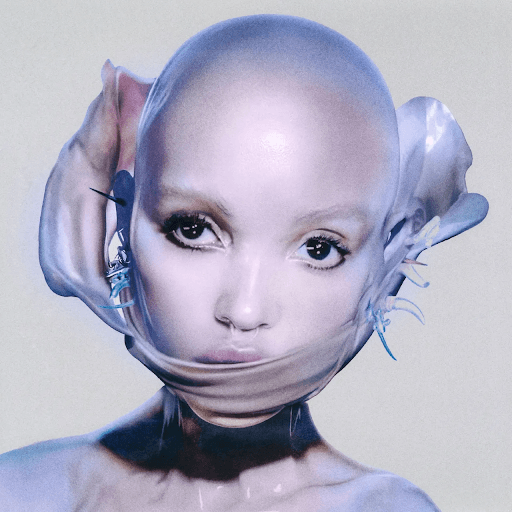
Near the end of the album, on the blissful “Piece of Mine,” twigs drops a telling pun on the title phrase: “It’s a long ride, baby / and I’m in peace of mind.” The lyric is carefree and idealistic, a loosening of her perfectionist mindset. Finally, we have the capstone to the long arc of healing detailed in her last three full-lengths. An alien twigs sheds her skin on the album cover, suspended between who she was and who she will become. How lucky we are that Afterglow gives us both at once.